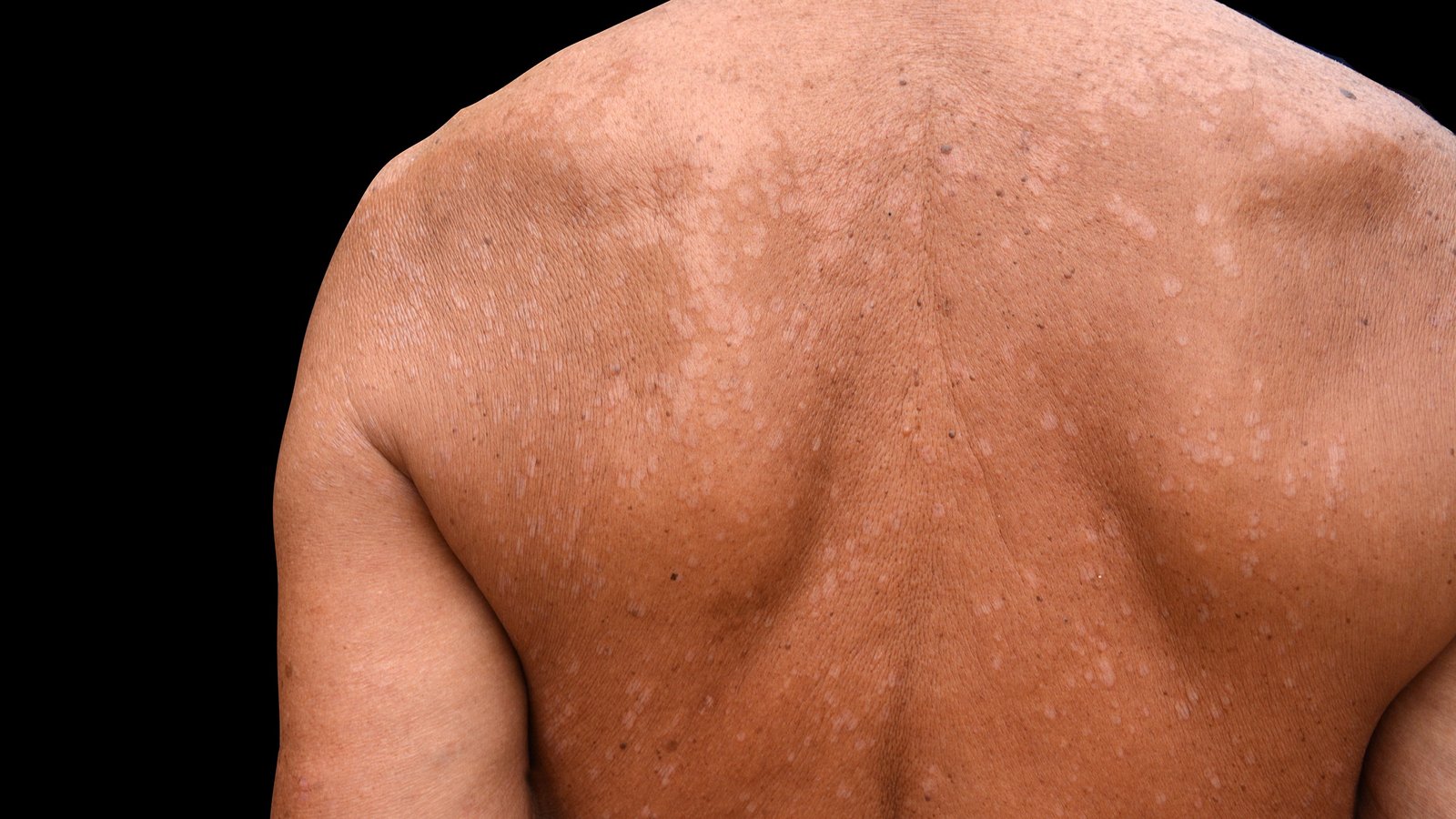
Tinea versicolor, also known as pityriasis versicolor, is a common fungal skin infection caused by yeast (Malassezia) that naturally lives on the skin. It leads to small, discoloured patches that may be lighter or darker than your normal skin tone, often appearing on the chest, back, shoulders, and neck. Although it is not harmful or contagious, it can cause cosmetic concerns and discomfort for many individuals.Our experienced dermatology team offers personalised treatment plans for tinea versicolor to restore your skin health and boost your confidence. Book your appointment today to get started on your journey to clear, healthy skin.
Causes of Tinea Versicolor
Excessive sweating
Hot and humid weather
Oily skin
Weakened immune system
Hormonal changes
The yeast grows rapidly in warm, moist environments, leading to the overgrowth that causes the condition.
Symptoms
Discoloured patches (white, pink, red, or brown)
Mild itching
Dry, scaly skin over affected areas
Patches that become more noticeable with tanning
Available Treatments for Tinea Versicolor
At our clinic, we offer effective treatment options to clear the infection and restore your skin’s natural appearance.
1. Topical Antifungal Treatments
✅ Medicated Creams or Lotions
Containing ketoconazole, selenium sulfide, or clotrimazole
Applied directly to affected areas to control the yeast growth
✅ Medicated Shampoos
Selenium sulfide or ketoconazole shampoos used on the body as prescribed
Useful for widespread or recurrent infections
2. Oral Antifungal Medications For severe, resistant, or recurrent cases, oral antifungal medicines such as fluconazole or itraconazole may be prescribed. These help clear the infection more effectively when topical treatments are insufficient.
Treatment Duration
Treatment usually takes 1-4 weeks, depending on severity and chosen therapy. Although the infection clears with treatment, skin colour may take several weeks to return to normal as pigmentation gradually restores.
Home Care and Prevention Tips
To reduce recurrence:
Bathe regularly and keep skin dry
Wear loose, breathable clothing
Avoid excessive heat and humidity when possible
Use medicated cleansers once or twice a month if you have frequent recurrences
Ramteke’s Skin & Heart Associates
HiHello , welcome to Ramteke's Skin & Heart Associates | Dr. Sumedh Ramteke | Dr. Pooja Manwar Ramteke